Noise Disruption During Reading Study
Peer-Reviewed Research
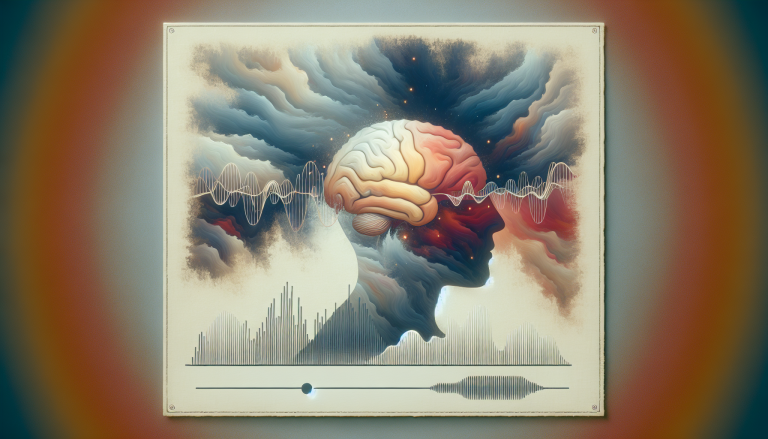
Background conversational noise, even at moderate levels, measurably increases cognitive load and psychophysiological strain during reading. A study from Xueyi Li, Yonghong Liu, and Zihui Jiang created an interactive system, “Reading Noise,” to make this invisible strain visible in real time, offering a new way to understand how sound disrupts focus.
Key Takeaways
- Background noise above 60 dB caused significant increases in skin conductance (a stress indicator) and self-reported cognitive load.
- Noise also reduced heart rate variability metrics (pNN50 and RMSSD), indicating a physiological shift away from a relaxed state.
- The “Reading Noise” installation translated these acoustic and physiological changes into visual distortions of text, such as jitter and deformation.
- This visual translation helped participants perceive and communicate their internal experience of auditory distraction, acting as a shared “boundary object.”
- The work provides a tangible model for how intrusive sound contributes to cognitive strain, relevant for conditions like misophonia and hyperacusis.
How the Study Measured Noise and Strain
The researchers designed a two-part project. First, they conducted a controlled experiment with 46 participants who read text while exposed to four escalating levels of background conversational noise: 0–30 dB, 31–60 dB, 61–90 dB, and above 90 dB. As participants read, the system recorded the ambient sound level, electrodermal activity (EDA) to measure sweat gland activity linked to arousal, and an electrocardiogram (ECG) to track heart rate variability.
After screening for data quality, the team performed statistical analysis on a subset of 16 participants with clear physiological signals. They found that as noise increased, so did the body’s stress response. Skin conductance level and the frequency of skin conductance responses rose significantly. Concurrently, heart rate variability—specifically the pNN50 and RMSSD measures, which are associated with parasympathetic (“rest and digest”) nervous system activity—decreased. Subjectively, participants’ ratings of their cognitive load jumped from an average of 2.06 to 6.38 on their scale as noise exceeded 60 dB.
Making the Invisible Visible: The “Reading Noise” Installation
The core innovation was translating this data into a real-time visual experience. Using the findings from the experiment, the authors developed a mapping strategy. Changes in the acoustic environment and the participant’s own physiology—sound level, EDA, and ECG—were fed into an algorithm that dynamically altered the text on a screen.
Parameters like the intensity of text deformation, character jitter, and motion instability increased in response to higher noise and greater physiological arousal. For example, a calm reader in a quiet room would see stable text. The same reader in a noisy café, experiencing subconscious stress, would see the text begin to shake and warp, providing an external, visual representation of their internal cognitive strain.
Facilitating Shared Understanding of Auditory Distraction
In a follow-up installation study with 24 participants from various fields, the system demonstrated its value as a communication tool. Observations from a 12-participant group session indicated that the visualizations helped people articulate a typically private experience. The warping text served as a shared reference point, or “boundary object,” allowing individuals to point to a concrete manifestation of their distraction and stress.
This moves the conversation about noise from subjective complaints (“It’s too loud in here”) to a shared observation (“Look how the text is shaking; that’s how disrupted my focus is”). For individuals with sound sensitivity conditions, this externalization could be a powerful aid in explaining their experience to others. The strain caused by intrusive noise parallels the challenges described in care models that integrate sensation and emotion.
Implications for Hearing Health and Sound Sensitivity
This research provides more than a novel art installation; it offers a quantified, physiological lens on how environmental noise imposes a cognitive tax. The findings that moderate noise (61-90 dB) triggers measurable stress and reduces heart rate variability are significant. They show that the brain is working harder to maintain focus, leaving fewer resources for comprehension and memory.
For people with hyperacusis or misophonia, where sound intolerance is central, this study offers a model. It illustrates how specific sounds can directly drive physiological arousal and cognitive load, disrupting daily activities like reading. The visual translation technique could inform therapeutic tools or educational aids to help patients and their families visualize and manage auditory triggers. Managing this kind of persistent cognitive strain is also important for overall well-being, as chronic stress can negatively impact sleep hygiene.
By externalizing hidden psychophysiological states, the “Reading Noise” project makes the abstract concrete. It validates the experience of those struggling with auditory distraction and provides a new method for studying how sound affects our minds and bodies.
The research discussed in this article is detailed in the original paper: Li X, Liu Y, Jiang Z. Reading Noise: An Interactive Installation for Externalizing Cognitive Load and Psychophysiological Strain in Reading. Multimodal Technologies and Interaction. 2026; 10(4):35. https://doi.org/10.3390/mti10040035.
Evidence-based options: zinc picolinate, magnesium glycinate
This article is for informational purposes only. Consult a qualified professional for personalised advice.
Medical Disclaimer
This article is for informational purposes only and does not constitute medical advice. The research summaries presented here are based on published studies and should not be used as a substitute for professional medical consultation. Always consult a qualified healthcare provider before making any changes to your health regimen.
Peer-reviewed health research, simplified. Early access findings, clinical trial alerts & regulatory news — delivered weekly.
No spam. Unsubscribe anytime. Powered by Beehiiv.
Related Research
From Our Research Network
Exercise & metabolic fitnessSleep Science
Sleep & circadian healthPet Health
Veterinary scienceHealthspan Click
Longevity scienceBreathing Science
Respiratory healthMenopause Science
Hormonal health researchParent Science
Child development researchGut Health Science
Microbiome & digestive health
Part of the Evidence-Based Research Network