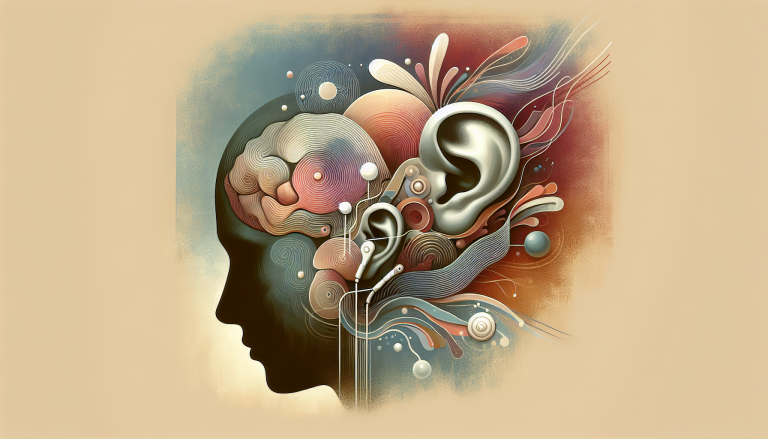
Tinnitus and Sleep Disturbance: A Bidirectional Cycle
Peer-Reviewed Research
A 2026 systematic review published in *Frontiers in Neurology* provides a detailed neurophysiological model for the debilitating cycle linking tinnitus and poor sleep. The work by Sun, Li, and colleagues argues that these two conditions are not merely coincidental but are bound by shared mechanisms in the brain, creating a self-sustaining loop that worsens both tinnitus distress and sleep quality.
Key Takeaways
- Tinnitus and sleep disturbance form a bidirectional “vicious cycle”: intrusive sounds disrupt sleep, and poor sleep heightens tinnitus perception and distress.
- Shared brain mechanisms, including persistent central hyperexcitability and maladaptive neuroplasticity in auditory-limbic networks, drive this comorbidity.
- Patients often experience cognitive-behavioral processes similar to primary insomnia, such as conditioned anxiety around bedtime.
- Effective treatment requires breaking the cycle with multimodal interventions that target both the auditory and sleep systems.
- Clinical management must shift toward comprehensive assessment and personalized plans, moving beyond treating each condition in isolation.
The Vicious Cycle: How Tinnitus and Poor Sleep Fuel Each Other
The relationship between tinnitus and sleep is reciprocal and destructive. Intrusive phantom sounds make it difficult to fall asleep or cause frequent awakenings. This leads to sleep that is fragmented and nonrestorative. In turn, sleep deprivation and fatigue lower stress tolerance and impair the brain’s ability to filter out irrelevant signals. This heightened state of arousal can amplify the perceived loudness and intrusiveness of tinnitus the following day, creating a predictable downward spiral. The authors note this cycle substantially compromises overall health and quality of life.
Shared Brain Mechanisms, Not Just Bad Luck
The core argument of the review is that this comorbidity is driven by overlapping dysfunctions in the central nervous system. Three interconnected pathophysiological drivers are highlighted.
First, persistent central hyperexcitability acts as a common foundation. In tinnitus, this is often seen as increased neural synchrony or “gain” in the auditory pathways. In insomnia, it manifests as a general hyperarousal of the nervous system that prevents sleep initiation. This hyperaroused state provides fertile ground for both conditions to thrive.
Second, maladaptive neuroplasticity within auditory-limbic networks is key. Tinnitus is not just an ear problem; it involves brain regions that process sound (auditory cortex) and emotion (limbic system, like the amygdala). The review suggests that poor sleep disrupts the normal regulation of these networks, potentially strengthening the emotional salience of the tinnitus signal and making it harder to ignore.
Third, the development of cognitive-behavioral processes akin to primary insomnia is common. Patients may develop conditioned anxiety around bedtime, fearing the silence that makes their tinnitus more prominent. They may engage in safety behaviors or spend excessive time in bed trying to sleep, which further fragments sleep architecture. This psychological layer reinforces the biological one.
Methodology: Synthesizing a Complex Evidence Base
Sun and Li’s team conducted a systematic review to integrate clinical, psychological, and neurobiological evidence. They analyzed data from neuroimaging studies, polysomnography (sleep study) research, and clinical trials to build their model. By examining findings across these disciplines, they moved beyond observing correlation to proposing a unified explanatory framework for the bidirectional link. Their methodology emphasizes that understanding the cycle requires looking at the whole person—brain, behavior, and perception—rather than isolated symptoms.
Practical Implications for Treatment and Management
The findings demand a shift in clinical practice. Treating tinnitus or sleep disturbance in isolation is likely to yield limited results if the reciprocal link is not addressed. The authors advocate for a comprehensive assessment that routinely evaluates sleep quality in tinnitus patients and tinnitus severity in those with insomnia.
The logical treatment approach is personalized multimodal intervention. This could involve combining sound-based tinnitus therapies with established sleep interventions. For example, Cognitive Behavioral Therapy for Insomnia (CBT-I) directly targets the maladaptive thoughts and behaviors that perpetuate sleep problems, which may also reduce tinnitus-related distress. The review suggests that therapies aimed at reducing central hyperexcitability, such as certain forms of neuromodulation or acupuncture, may also benefit both ends of the cycle. Managing co-occurring conditions like hyperacusis or depression, which are common in this population, is also essential.
Future Research and Conclusions
The review identifies clear opportunities for future work. Longitudinal studies are needed to track how the cycle begins and evolves over time. Clinical trials testing combined modality treatments against standard single-focus care are a priority. Researchers also need to identify biomarkers that predict which patients are most susceptible to this vicious cycle.
Ultimately, the work by Sun et al. reframes tinnitus and sleep disturbance as two manifestations of a shared neurophysiological disruption. Recognizing this interconnected “vicious cycle” is the first step toward developing more effective, holistic strategies that help patients break free from it and improve their restorative sleep and daily life.
Source: Sun J, Li D, Jin J, Tian Y, Leng H. Vicious cycle: the bidirectional relationship and pathophysiological mechanisms of tinnitus and sleep disturbance. Front Neurol. 2026;17:1837549. doi: 10.3389/fneur.2026.1837549. PMID: 42638957.
Evidence-based options: zinc picolinate, magnesium glycinate
Medical Disclaimer
This article is for informational purposes only and does not constitute medical advice. The research summaries presented here are based on published studies and should not be used as a substitute for professional medical consultation. Always consult a qualified healthcare provider before making any changes to your health regimen.
Peer-reviewed health research, simplified. Early access findings, clinical trial alerts & regulatory news — delivered weekly.
No spam. Unsubscribe anytime. Powered by Beehiiv.
Related Research
From Our Research Network
Exercise & metabolic fitnessSleep Science
Sleep & circadian healthPet Health
Veterinary scienceHealthspan Click
Longevity scienceBreathing Science
Respiratory healthMenopause Science
Hormonal health researchParent Science
Child development researchGut Health Science
Microbiome & digestive health
Part of the Evidence-Based Research Network