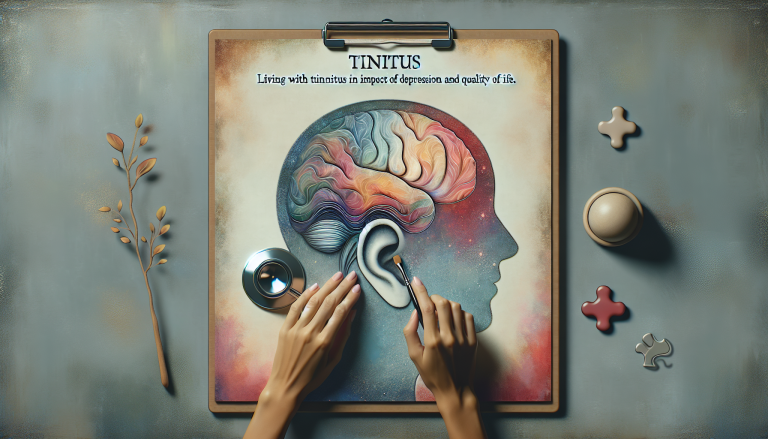
Manage Stress, Manage Tinnitus
Peer-Reviewed Research
Understanding the Anxiety-Tinnitus Distress Link: Why How You Feel Matters
If you live with tinnitus, the persistent ringing, buzzing, or hissing in your ears, you know it’s more than just a sound. It can affect your mood, concentration, and overall quality of life. For decades, researchers have observed a connection between tinnitus and emotional well-being, particularly anxiety. But a key question remained: does anxiety make tinnitus worse, or does severe tinnitus cause anxiety? Groundbreaking research published in 2026, titled “Higher Levels of Anxiety and Tinnitus Distress,” provides critical new insights into this complex relationship. This article will break down that research into simple, actionable information for patients and caregivers, explaining not just what the scientists found, but what it truly means for managing life with tinnitus.
Decoding the Research: The Core Findings Explained
The 2026 study took a sophisticated approach to untangle the anxiety-tinnitus knot. Instead of just asking people about their symptoms, researchers used validated psychological scales to measure two distinct things separately: the loudness and presence of the tinnitus sound and the emotional distress and life impact caused by that sound.
Anxiety Isn’t Just a Side Effect; It’s a Major Driver of Distress
The most significant finding was clear and powerful: Anxiety levels were the strongest predictor of how much distress a person experienced from their tinnitus. This means that among all factors measured, a person’s general anxiety level was more closely linked to their suffering than the perceived loudness of the tinnitus itself. The study showed that people with higher baseline anxiety experienced their tinnitus as more intrusive, annoying, and life-disrupting.
The “Vicious Cycle” Gets Scientific Backing
The research provided strong evidence for what many patients describe: a vicious cycle. Tinnitus can cause stress and anxiety. That heightened anxiety, in turn, increases the brain’s focus on and sensitivity to the tinnitus signal, making it seem louder and more bothersome. This then creates more anxiety, perpetuating the cycle. The study confirmed that anxiety amplifies the reaction to the tinnitus signal in the brain, intensifying the perceived distress.
Hearing Loss Plays a Supporting, Not Leading, Role
While the study acknowledged that hearing loss is often associated with tinnitus, it found that the degree of hearing loss was not the primary driver of tinnitus distress. Two people with identical audiograms (hearing tests) could have vastly different tinnitus experiences based on their psychological state. This underscores a modern understanding of tinnitus as a brain-based disorder, often involving central abnormalities in how the nervous system processes sound and attention.
What This Means for Patients and Caregivers
This research shifts the focus from a purely “ears” problem to a “brain and well-being” problem. The implications are profound and hopeful.
A New Target for Effective Treatment
Since anxiety is a major lever for tinnitus distress, effectively managing anxiety should be a central pillar of any treatment plan. This doesn’t mean the tinnitus sound isn’t real; it means that by calming the nervous system’s reaction, the sound can lose its power to disturb. This validates the use of therapies like Cognitive Behavioral Therapy (CBT), mindfulness, and relaxation training, which target the emotional response.
Personalized Care: Your Emotional Health is Key
The study argues for a personalized approach. A treatment plan should include an assessment of anxiety, stress, and mood, not just a hearing test. Addressing co-occurring anxiety might bring more relief than treatments focused solely on sound masking. For caregivers, this means understanding that a loved one’s frustration or despair is a core part of the condition, not an overreaction.
Empowerment Through Understanding
Knowing that anxiety fuels distress can be empowering. It gives you a concrete area to work on. It moves some control back to you. If the distress can be influenced by managing anxiety, then you have a path forward that involves skills and strategies you can learn and practice.
Actionable Insights: Translating Research into Daily Life
How do you apply these findings? Here are practical steps based on the research.
1. Advocate for a Holistic Assessment
When seeking help, ask your healthcare provider or audiologist about assessing the impact of your tinnitus, not just its pitch and volume. Mention this research and discuss your anxiety and stress levels openly. A complete treatment plan, as explored in our complete evidence-based treatment guide, should address both the auditory and emotional components.
2. Prioritize Anxiety-Reduction Techniques
Actively integrate anxiety management into your daily routine. This is not supplementary; it is foundational. Evidence-based practices include:
- Mindfulness Meditation: Trains the brain to observe the tinnitus without an emotional reaction, breaking the cycle of distress.
- Deep Breathing/Diaphragmatic Breathing: Calms the nervous system directly, reducing the “fight-or-flight” response that amplifies tinnitus.
- Regular Physical Exercise: A powerful natural anxiety reducer and mood booster.
- Cognitive Behavioral Therapy (CBT): Works specifically to change the negative thought patterns and behaviors associated with tinnitus distress.
3. Reframe the Goal: Habituation Over Elimination
For many, the desperate goal is to eliminate the sound completely. This research suggests a more achievable and equally valuable goal: habituation. This is the process by which your brain learns to classify the tinnitus as an unimportant background noise, much like you ignore the hum of a refrigerator. Reducing anxiety is the fastest route to habituation, as a calm brain is better at filtering out irrelevant signals.
4. Explore Neuroscientific and Integrative Approaches
Modern treatments are increasingly targeting the brain’s neuroplasticity—its ability to rewire itself. Techniques that combine sound therapy with attention and reward training can help the brain “unlearn” its focus on tinnitus. Exploring neuroscientific approaches to treating tinnitus can open doors to these next-generation therapies. Additionally, consider overall nervous system health through diet, sleep hygiene, and possibly supplements, as areas like gut health are being studied for their role in inflammation and symptom perception.
Common Misconceptions Debunked by the Research
- Misconception: “My tinnitus distress is directly proportional to how loud it is.”
Reality: The 2026 study shows your anxiety level is a stronger predictor of distress than loudness. - Misconception: “If I just fix my hearing loss, my tinnitus will go away.”
Reality: While related, hearing loss is not the sole cause of distress. The brain’s central processing and emotional response are critical. - Misconception: “Feeling anxious about my tinnitus is a sign of weakness.”
Reality: Anxiety is a normal, physiological response to a persistent, unwanted stimulus. The research confirms it’s a central part of the condition’s pathology. - Misconception: “Treatments should only target the ear.”
Reality: The most effective treatments are multidisciplinary, targeting the auditory pathways, brain networks, and emotional centers simultaneously.
Key Takeaways
- Anxiety is the #1 Driver of Tinnitus Distress: Your general anxiety level influences your suffering more than the objective loudness of the sound.
- It Confirms the Vicious Cycle: Tinnitus causes anxiety, and that anxiety worsens the perception of tinnitus, creating a self-reinforcing loop.
- Treatment Must Be Holistic: Effective management requires addressing psychological well-being alongside auditory health. A hearing test alone is insufficient.
- You Have a Path to Empowerment: By learning to manage anxiety through techniques like CBT, mindfulness, and relaxation, you can directly reduce tinnitus distress.
- The Goal is Habituation: Shifting the focus from total silence to making the sound unimportant (habituation) is a more realistic and empowering objective.
- Advocate for Your Care: Discuss anxiety and emotional impact with your healthcare provider to ensure your treatment plan is comprehensive.
This article is for informational purposes only. Consult a qualified professional for personalised advice.
💊 Popular tinnitus supplements
These are among the most commonly researched supplements for tinnitus. Available on iHerb (ships worldwide):
Magnesium Glycinate ↗
Zinc Picolinate ↗
Vitamin B12 ↗
Affiliate disclosure: we may earn a small commission at no extra cost to you.
Source:
Read the original research: HIGHER LEVELS OF ANXIETY AND TINNITUS DISTRESS
This article summarizes current research for patients and caregivers. Always consult with your healthcare provider for personalized medical advice.
Medical Disclaimer
This article is for informational purposes only and does not constitute medical advice. The research summaries presented here are based on published studies and should not be used as a substitute for professional medical consultation. Always consult a qualified healthcare provider before making any changes to your health regimen.
Peer-reviewed health research, simplified. Early access findings, clinical trial alerts & regulatory news — delivered weekly.
No spam. Unsubscribe anytime. Powered by Beehiiv.
Related Research
From Our Research Network
Exercise & metabolic fitnessSleep Science
Sleep & circadian healthPet Health
Veterinary scienceHealthspan Click
Longevity scienceBreathing Science
Respiratory healthMenopause Science
Hormonal health researchParent Science
Child development researchGut Health Science
Microbiome & digestive health
Part of the Evidence-Based Research Network