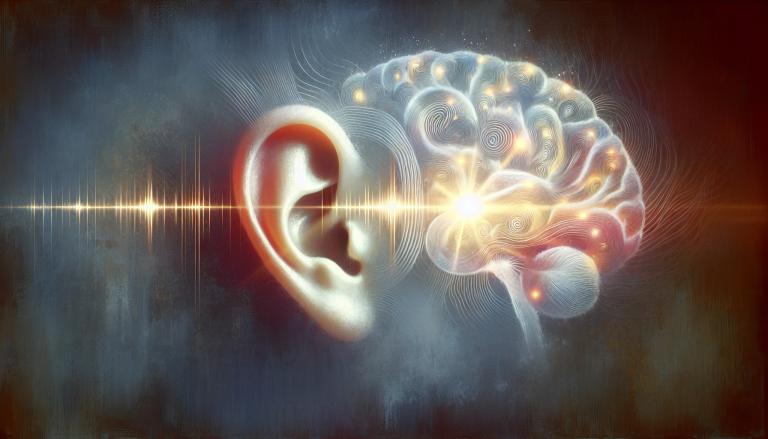
Hearing Health: From Cochlea to Cortex
Peer-Reviewed Research
Hearing impairment is one of the most common sensory disorders globally, affecting far more than just the ability to detect quiet sounds. This is the central argument of an editorial by Agnieszka J. Szczepek of Charité-Universitätsmedizin Berlin, published in *Brain Sciences*, which calls for a more integrated view of auditory health.
Key Takeaways
- Hearing impairment is a complex disorder extending beyond simple volume loss to affect central brain processing.
- Conditions like tinnitus, hyperacusis, and misophonia are now understood as brain disorders linked to changes in neural networks.
- A holistic “auditory health” approach is needed, connecting ear pathology to its cognitive and emotional consequences.
- This integrated model directly supports the development of more effective, multidisciplinary treatments.
Beyond the Audiogram: Redefining Hearing Impairment
For decades, the primary tool for assessing hearing has been the audiogram, a chart measuring the faintest sounds a person can detect at different pitches. While essential, Szczepek argues this is an incomplete picture. Hearing impairment is not solely a problem of signal input at the ear; it encompasses the entire auditory pathway, from the cochlea to the cortex.
The experience of hearing involves intricate brain networks responsible for interpreting sound, assigning meaning, and regulating emotional responses. When this system malfunctions, the results are disorders that cannot be explained by threshold shifts alone. This reframing is vital for understanding why someone with normal audiogram results can be disabled by tinnitus, misophonia, or hyperacusis.
The Brain’s Role in Auditory Disorders
The editorial synthesizes a growing body of evidence that places central neural processing at the heart of many auditory conditions. Tinnitus, for instance, is increasingly seen as a maladaptive plasticity of the brain, where the auditory cortex generates a phantom perception in the absence of sound. Similarly, hyperacusis (sound intolerance) and misophonia (a strong negative reaction to specific sounds) are linked to abnormal connections between the auditory system and brain regions governing emotion, attention, and threat assessment.
This shift from a peripheral-ear model to a central-brain model has profound implications. It explains why two people with identical hearing loss may have vastly different experiences—one may adapt while another develops debilitating tinnitus. It also highlights why treatments focused solely on the ear often fall short for these complex conditions.
Toward a Model of Integrated Auditory Health
Agnieszka J. Szczepek proposes an “integrated auditory health” framework. This model demands that researchers and clinicians consider the full spectrum of the hearing process: the peripheral damage, the subsequent neural changes in the brainstem and cortex, and the resulting cognitive and emotional effects.
For example, hearing loss can lead to social isolation and increased cognitive load as the brain strains to decode degraded signals. This strain can contribute to anxiety, depression, and accelerated cognitive decline. The integrated model connects these dots, viewing them as interrelated components of a single health issue rather than separate problems. This aligns with broader research into how migraine and hearing disorders share common neural pathways.
Methodology of the Editorial Synthesis
The editorial by Szczepek does not present new experimental data. Instead, it functions as a scholarly synthesis and a call to action. The author reviewed and interpreted the collective findings from the Special Issue “Recent Advances in Hearing Impairment” in Brain Sciences, alongside the wider contemporary literature. The methodology involves connecting evidence from molecular biology, neuroimaging, psychophysics, and clinical audiology to build a coherent argument for a paradigm shift in the field.
Practical Implications for Treatment and Research
Adopting an integrated auditory health perspective changes how we approach prevention, diagnosis, and therapy.
First, it argues for early intervention. Protecting hearing is also about protecting brain health and long-term quality of life. This makes public health initiatives on noise exposure, like understanding risks in environments from social events to industrial workplaces, even more critical.
Second, diagnosis must expand. Assessments should include evaluations of sound tolerance, speech understanding in noise, and the psychological impact of hearing difficulties, not just pure-tone thresholds.
Third, treatment becomes multidisciplinary. Effective care may combine audiological tools (hearing aids, sound generators) with neurological and psychological strategies. For instance, managing misophonia often requires techniques that target the emotional response, such as cognitive reappraisal therapies. Similarly, treatments like tinnitus retraining therapy or newer neuromodulation approaches aim to normalize the dysfunctional brain activity identified by the integrated model.
A Unified Path Forward
The work summarized by Szczepek marks a significant maturation in hearing science. By defining hearing impairment as a disorder that spans from the cochlea to the cortex, it provides a more accurate and compassionate framework for the millions of people affected. This view encourages collaboration between otologists, audiologists, neurologists, and psychologists.
Future progress depends on continuing to investigate the brain’s auditory networks, developing biomarkers for central auditory disorders, and creating therapies that address the whole system. As this editorial concludes, the goal is a holistic standard of care that treats the person, not just the ear.
Source: Editorial: “From the Cochlea to the Cortex: Toward Integrated Auditory Health” by Agnieszka J. Szczepek. Brain Sci. 2026, 16(6), 640. doi:10.3390/brainsci16060640. PMID: 42352649.
Evidence-based options: zinc picolinate, magnesium glycinate
Medical Disclaimer
This article is for informational purposes only and does not constitute medical advice. The research summaries presented here are based on published studies and should not be used as a substitute for professional medical consultation. Always consult a qualified healthcare provider before making any changes to your health regimen.
Peer-reviewed health research, simplified. Early access findings, clinical trial alerts & regulatory news — delivered weekly.
No spam. Unsubscribe anytime. Powered by Beehiiv.
Related Research
From Our Research Network
Exercise & metabolic fitnessSleep Science
Sleep & circadian healthPet Health
Veterinary scienceHealthspan Click
Longevity scienceBreathing Science
Respiratory healthMenopause Science
Hormonal health researchParent Science
Child development researchGut Health Science
Microbiome & digestive health
Part of the Evidence-Based Research Network